|
Language
The language in Brazil is Portuguese, not Spanish. Although the two language are distinct, common origins mean that many words are similar, and fluent speakers of Spanish will be able to make themselves understood. In most hotels, someone on the staff will speak English. Taxi drivers will rarely speak English.
Religion
90% Roman Catholic
Time
Three hours behind GMT in the east, north-east, south and south-east; four hours behind GMT in the west; and five hours behind GMT in the far west. Curitiba is three hours behind GMT.
President
Luiz Inácio Lula da Silva
Arriving and Departing
By Plane
All international flights and most domestic flights arrived and depart from Rio de Janeiro - Galeão International Airport and São Paulo - Cumbica International Airport. You need to get a connection to Curitiba - Afonso Pena International Airport.
Getting Around
By Bus
The nation's bus network, Ônibus , is extensive and highly efficient, compensation for the lack of trains and the high cost of air travel. Every major city in the country can be reach by bus and most of the small- to medium-size cities are also linked to the network. Buses are for the most part modern and comfortable, and the companies have excellent on-time records.
By Car
Brazil has more than 1.6 million km of highway, about one-tenth of which is paved. Recent developments and construction are improving the situation.
- License Driver: Your national driver's licenses are accepted in Brazil.
- Gasoline: Cost around $1.30 a liter ($5 a gallon). Unleaded gasoline is called especial and carries the same price. Brazil also has an extensive fleet of ethanol-powered cars. Ethanol fuel is sold at all gas station, and cost a little less than gasoline. However, alcohol cars get lower mileage, so they have no advantage over gasoline-power automobiles. Gas stations are plentiful both within cities and on major highways, and many are open 24 hours a day. In smaller towns, few take credit cards and are sometimes closed Sunday.
- Parking: Finding a parking space in most of Brazil's leading cities is a major task. The best option is to find a parking garage and leave your car with the attendant. Should you find a parking space on the street, you will probably have to pay a parking fee. There are no parking meters. There is instead a system involving parking coupons, which are purchased either from uniformed street parking attendants or at newspaper stands. Each coupons is good for two hours.
- Rules of the road: Brazilians drive on the right-hand side of the road, and in general, traffic laws are the same as in the United States.
By Plane
There is regular jet service between all of the country's major cities and most medium-size cities. Flights can be long, lasting several hours on trips to the Amazon with stops en route. Planes tend to fill up on the weekends, so book in advance if you plan to fly anywhere on a Friday, especially to or from Brasília or Manaus. Is you are going to traveling, buy a Brazilian Air Pass from one of Brazil's major airlines before you leave. These can only be purchased externally. Each airline offers its own versions of the air pass and prices fluctuate according to the season, the area of the country and the number of flights.
Generally, $440 buys five flights within Brazil over a period of 21 days. Better deals can be found off season, March through June. Prices multiply by about 10 if you are buying tickets in the country itself. Also, do your best to ensure that when covering great distances you have as few stops as possible.
Other option is you arranged all your trip in your country because in most of the case this is the cheaper way to travel and get a special rate.
You can also stop your flight in Rio de Janeiro and Iguassu Falls.
The major commercial airlines are:
Customs and Duties
Former strict import controls have been substantially liberalized as part of the Brazilian government's efforts to open the nation's economy to foreign competition. In addition to personal items, visitors are now permitted to bring in duty-free up to $500 worth of gifts purchased abroad. An additional $500 worth of gifts, including alcoholic beverages, may be purchased at the airport duty-free shops.
Dining
- Dress: Informality is the rules of thumbs. Only at the top restaurants do Brazilians dress up, and men seldom wear jackets and ties.
- Mealtimes: Lunch and dinner typically are eaten later. Lunch in a restaurants usually starts at around 12:00 and often lasts until 14:00. Dinner is always eaten after 8:00 until 24:00.
- Prices: Rio is as expensive as any other large city worldwide; São Paulo more so. Outside of theses two cities , prices come down significantly. Prices ranges are for one person and do not include alcoholic beverages and tips, but do include the couvert or coberto , an appetizer course that includes bread, butter, and, depending on the restaurant, cheese or pâté, olives, quail eggs, and sausage.
Safety
In Rio, São Paulo, Salvador, Manaus, Belém, and major cities along the northeastern coast - like in any other urban center tourist should take precautions to protect themselves from petty crimes. If this happened, please, don't react. Smaller cities tend to be safer, Curitiba do not have the high crime rates of the nation's other large cities.
Please, Curitiba is a safety place, but it is recommended don't go walk alone in dangerous areas. After 22:00 walk only in a group.
Passport, Visa and Vaccination
Most foreign visitors entering Brazil must have a valid passport and a valid visa. Visas must be obtained before departure and applications should be made to a Brazilian Consulate or Diplomatic Mission in the country of residence. Brazilian consulate some times requires a letter inviting the delegates to the meeting, mainly in the U.S. In this case, you need to apply this in the registration form. Delegates are advised to check with their local travel agency about the time necessary for obtaining such a visa.
Please, check in your country if some special requirements are necessary like Yellow Fewer Vaccination.
Mail
Post Offices are called "Correios" , and branches are marked by the name and a logo; most are open weekdays 8-5 and Saturday until noon. Mailboxes are small yellow boxes marked CORREIOS that sit atop metal pedestals on street corners.
Many hotel offer the post office service, so you can ask about that in the hotel lobby.
Postal Rates: An airmail letter from Brazil to the United States and most part of Europe, including the United Kingdom, cost approximately R$1. Object of value-especially currency, checks, or credit cards-should never be sent through the mail.
Money and Expenses
All the places in Brazil only accepted Brazilian currency (Reais). Major credit cards will also be accepted, and the transaction processed in Reais.
Credit Cards
Visa, Mastercard, American Express, Diners Club and some other credit cards are accepted in most hotels, restaurants and some shops.
Changing Money
You can change money in the bank and in the international airport. Do not expect to be able to use Euro, American dollars or other hard currencies for taxis or other purposes.
Rate
The rate is changing. To see the daily rate check CNN
Currency
There are 100 cents (centavos) to each real. The lowest value of the new currency system is one cent (centavos). There are notes worth 1, 5, 10, 50, and 100 reais, together with coins worth 1, 5, 10, 25 and 50 centavos, as well as one real, all of which feel and look similar.
Forms of Payment
Traveler's check (well known names are best) and credit cards (mainly VISA, Mastercard, AMEX, and Diners Club) are accepted in Brazil.
Opening and Closing Times
|
|
|
|
|
Weekdays |
Saturday |
Sunday |
| Banks |
10:00 - 16:00 |
Closed |
Closed |
| Churches |
during service |
during service |
during service |
| Stores |
09:00 - 19:00 |
09:00 - 13:00 |
Closed |
| Malls |
10:00 - 22:00 |
10:00 - 22:00 |
13:00 - 19:00 |
| Public Offices |
08:00 - 17:00 |
Closed |
Closed |
Banks
Nearly all the nation's major banks have automated teller machines (ATMs) scattered throughout the country. Most of the ATMs accept MAESTRO and CIRRUS ATM cards. Check with you bank to see what services they offer in Brazil.
Telephones
To call Brazil from overseas, dial the country code, 55, and then the area code, omiting the first 0.
Directory Assistance and Operator Information
For local directory assistance, dial 102. For directory assistance in another Brazilian city, dial the area code of that city plus 121.
Local and Long-Distance Calls
Public phones are everywhere, to use them, buy a telephone card, Cartão de telefone, at either a phone office, posto telefônico, a newspaper and magazine kiosk, post offices, or some pharmacies. Rates double during peak hours (9:00-12:00 and 14:00-18:00). The lowest rates are available after 23:00.
International Calls
To make a international call from the hotel follow the hotel instructions.
- For international calls with the assistance of the operator, dial 000111.
- For international information, dial 000333.
- Collect international call, dial 000-111 and then asking for the long distance service of your choice.
- To reach an AT&T operator, dial 000-9010. For MCI, call 000-8012. For Sprint, dial 000-8016.
How to Dial
To dial direct, dial 00 plus the country code, the area code of the city you are calling, and ten the number.
Tipping
In most of the case the tip is already include in the bill and it is 10%. It is not necessary to give tip to taxi driver.
Climate
On September the average daily maximum and minimum temperatures in Curitiba range from 12 to 22 degree Celsius. For additional information please check at CNN.
Power & Telephone Outlets
Single-phase voltage:
Plug/Socket Type:
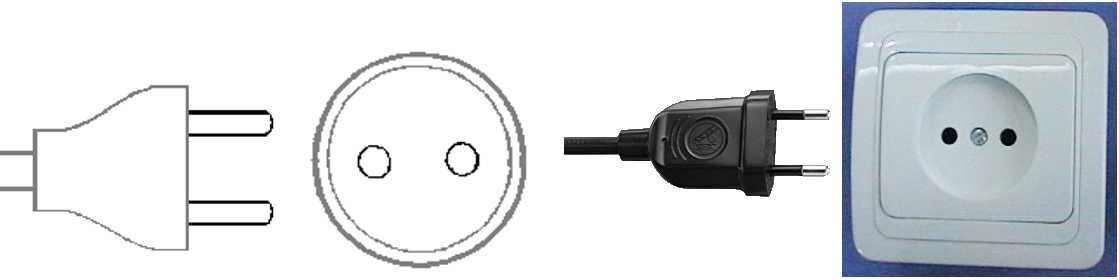
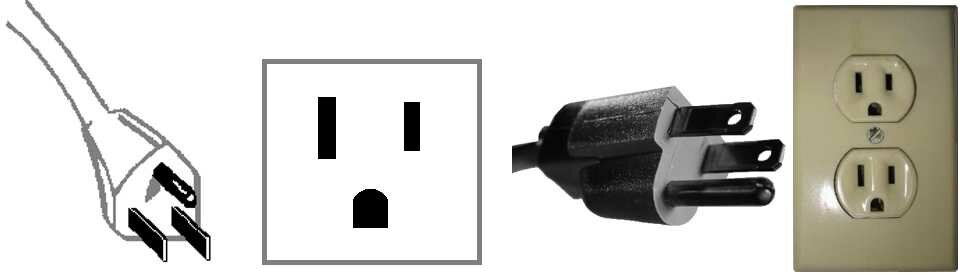
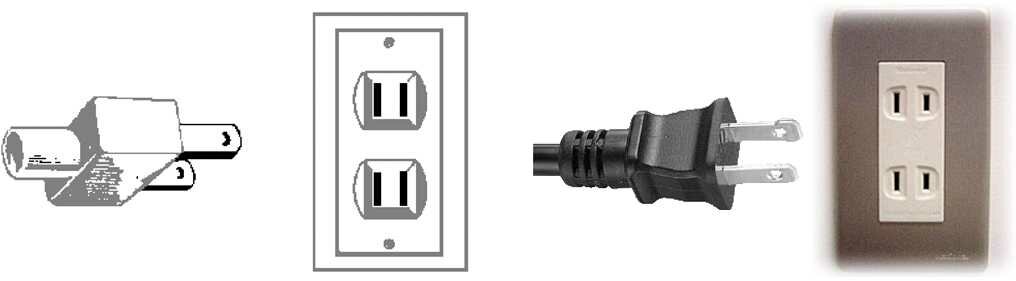
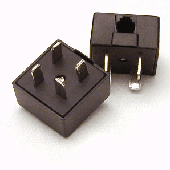
Telephone socket type: RJ-11
|

